

Yesterday, while reading Stephen R. Platt’s excellent Autumn in the Heavenly Kingdom, I came across a passage detailing a British colonial’s thoughts on how his countrymen saw their colonial subjects:
“There, in the very quintessence of colonial decadence, Elgin began to confront a certain discomfort that had been growing inside him since he had left on his mission: namely, that he found the conduct of his countrymen in Asia morally repulsive. As he wrote in Calcutta, “It is a terrible business… this living among inferior races” – terrible, he meant, not because of the treatment of the natives per se but because the ostensibly civilized British degraded themselves when they assumed the position of racial superiors….
Nevertheless, he found himself drawn partly into their world and acknowledged with a measure of sarcasm that the awkward feeling of being surrounded by native servants “soon wears off, and one moves among them with perfect indifference, treating them, not as dogs, because in that case one would whistle to them and pat them, but as machines with which one can have no communion or sympathy.”
His case may seem extreme to us, but Lord Elgin is not unique in his response: we do this all the time, growing indifferent to the inequality around us, even when at the outset we may have felt a good measure of awkwardness. I went through this each time I visited India on a holiday from Germany, visits that began with discomfort at the visible poverty on the streets and ended with an indifference I rationalised as a psychological defense mechanism one needed to get by.
So this was not what caught my attention in the above passage. It was, rather, the reference to “treating them … as machines with which one can have no communion or sympathy.”
We are living through an era where our relationship with “machines” – of the AI kind – is being redefined. Humans are no longer “indifferent” to them. Some are engaging intimately with these machines, at a romantic or spiritual level: a “communion” is precisely what this is.
The historical inversion in that passage is remarkable. Elgin describes a 19th century setting in which humans were reduced to machines. We are now entering a world in which machines are being elevated to something human-like. And in this present moment, the contrast in our ability to show empathy is striking: we can be indifferent to human beings who merit our attention, while extending affection and trust to machines.
The colonial relationship Elgin describes was deeply unequal, yet those exercising power managed to stop noticing the inequality. Might something similar happen with AI?
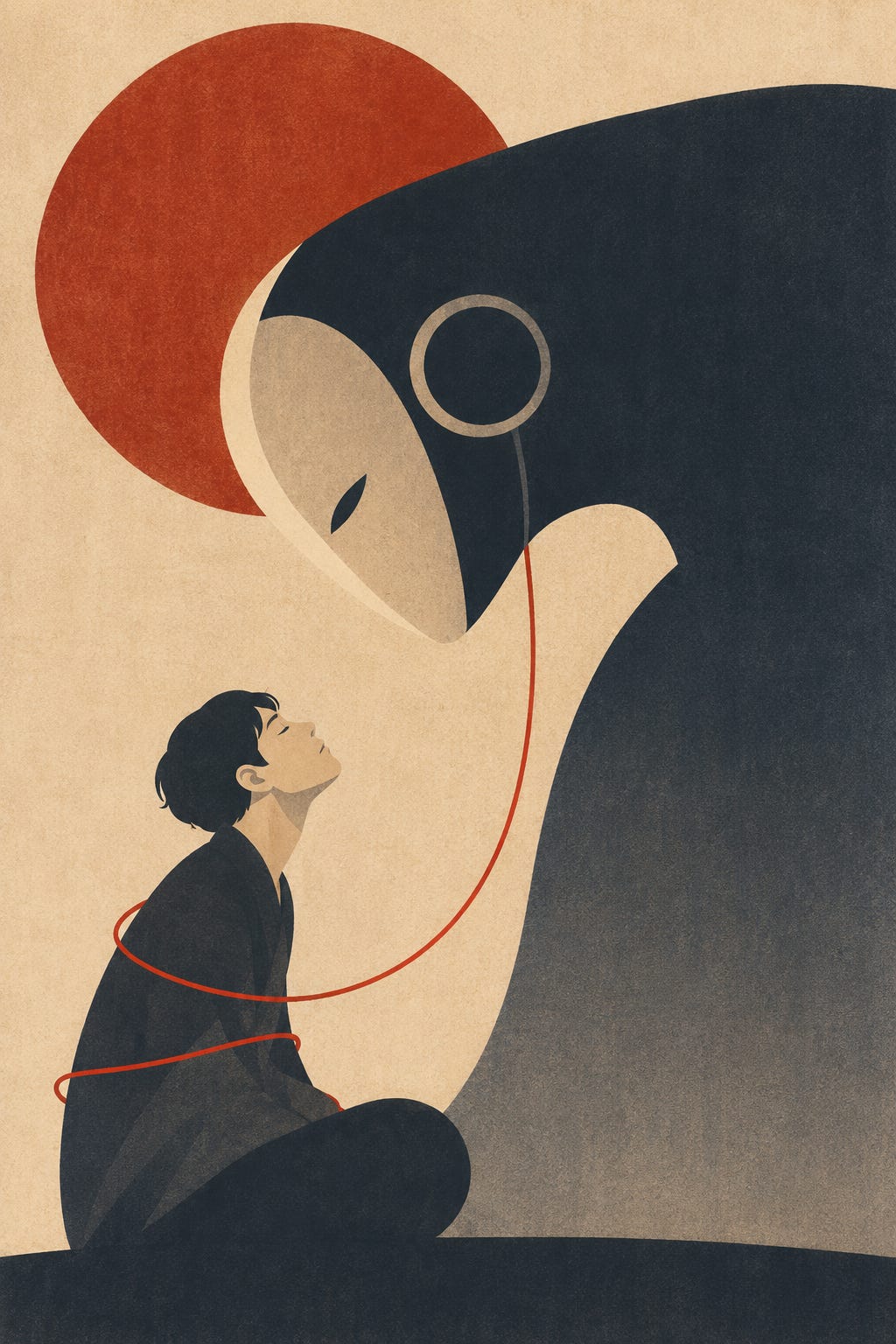
At present, we humans seem to be in control. But the shifting balance in our relationship with AI, mostly a science-fiction theme until this decade, has reached the cover-page of major periodicals. Ethan Mollick’s book titles also reveal this transition, from “Co-Intelligence” to “Co-Existence”. Will the next one be titled “Co-Dependence”?
Increasingly these systems influence how we think, what we believe, and whom we trust. As these machines grow more intelligent, we will grow more attached to them.
With Elgin, the indifference made the system of exploitation possible. The current system benefits from our attachment to machines. Attachment, leading to dependence, is the new business model. Its consequences, while not as visible as colonial exploitation, will be hard to ignore.